I’ve loaded bounce castles onto trailers at 6 a.m. with coffee in one hand and a tarp in the other. I’ve had to deflate a unit mid-party because the wind kicked up and the stakes weren’t biting. I’ve watched a toddler zip down an inflatable waterslide for the first time and come up grinning so big he forgot to breathe for a second. If you’re thinking about renting a bouncy house for a birthday, school carnival, church picnic, or neighborhood block party, there’s a sweet spot between magical fun and practical logistics. Here’s how to find it.
Start with the event, not the inflatable
Before you scroll through a dozen glossy photos of inflatable rentals, get clear on the job your rental needs to do. A backyard birthday for eight kids ages 3 to 6 has a different pace than a fifth-grade field day with 200 kids rotating through stations, and both are different from a family reunion where the kids are spread from toddlers to teens.
Age range drives the decision more than anything else. Little ones do best with small bounce houses for parties that have lower walls, soft steps, and gentle slides. Older kids crave a bounce house obstacle course, inflatable interactive games for kids like joust arenas, or inflatable waterslides that deliver real speed. Capacity matters too. A standard 13-by-13 bouncy house comfortably handles 6 to 8 little kids at a time, fewer if you have 9- to 12-year-olds.
Site, schedule, and weather matter more than marketing. If your yard slopes, that giant two-lane slide will never stand level. If your party is mid-July in the afternoon, vinyl gets hot without shade or water. If you’re renting for a public venue, you may need additional insurance or a permit. Think through the day from setup to pickup, with people walking, kids waiting, and the occasional spilled juice or thundercloud.
Space, power, and ground: the three basics no one tells you about
Measure your space. Don’t eyeball it. Bounce castles list their footprint, but you need extra clearance on every side for blower tubes, stakes, and safe entry. For a 13-by-13 house, plan at least 18 by 18 feet of open, flat space, and 15 feet of vertical clearance. For a slide or obstacle course, add more. Trees, fences, and low wires complicate everything, and a single sprinkler head can wreck your day if you punch a stake right through it.
Power is not optional. Most standard units use one 1.0 to 1.5 horsepower blower that draws around 7 to 12 amps. Big slides and obstacles can need two blowers. You want a dedicated 15- or 20-amp circuit per blower, ideally within 50 to 75 feet. Long, thin extension cords drop voltage and overheat. Ask your provider to bring the correct gauge cord, and make sure your outlets aren’t already feeding a fridge or outdoor heaters. If power isn’t feasible, some companies offer generators. A quiet 3000-watt unit typically runs a single blower for 6 to 8 hours on a full tank. Generators add cost and noise, but they solve long-driveway and park setups.
Ground is safety. Grass is best because stakes hold. Concrete is fine with sandbags if your provider uses enough weight and distributes it well. Gravel is a bad idea unless you lay down heavy tarps and foam pads. A gentle slope is manageable under 5 percent. Anything more and you risk instability. If you irrigate, know where the lines run. Mark them or ask your provider to use shorter stakes. I’ve seen a backyard geyser turn a party into a slip-and-slide carnival, which sounds fun until you see the water bill.
Safety is more than a waiver
Good operators obsess over safety because it keeps people smiling and keeps them in business. You’ll see this in how they stack their trucks, how they clean, and how they set up.
Look for a company that stakes or weights the unit properly and refuses to run inflatables in even moderate winds. The conservative limit is 15 to 20 miles per hour for typical bounce houses, lower for tall slides due to sail effect. Ask whether they carry a wind meter, not just a weather app. Ask about secondary attachment points, ground tarps to keep the base clean and dry, and wet/dry conversion safety if you’re booking a slide.
Rules inside the unit matter just as much. The biggest risk isn’t the inflatable failing, it’s kids colliding. Mixed ages create chaos. Big kids launch small ones, and the ones with glasses never see it coming. If you can separate play by age in 10-minute rotations, do it. Enforce the socks or bare feet rule. No sharp objects, no food, no gum. It sounds fussy until you’re scraping melted gummy bears off vinyl at dusk.
If you’re renting for a public event, consider an attendant. Some companies include one for large inflatables for parties, and it’s worth it. An adult who is not emotionally invested in keeping every child happy will shut a unit down when lightning threatens or when the line turns into a mosh pit. That quick call prevents injuries and keeps your event moving.
Cleanliness, materials, and what “sanitized” should mean
Inflatables live outdoors and meet a lot of faces, feet, and sunscreen. Cleaning isn’t cosmetic, it’s health and durability. A solid provider cleans after every rental with an appropriate disinfectant that won’t degrade the vinyl. You should see evidence of this when they unroll the unit: no grit, no sticky spots, no smells. If a unit arrives damp, ask why. Morning dew happens, so does drying time after cleaning, but standing water in seams is a problem.
Materials matter less to a parent than to a rental operator, but they’re worth understanding. Commercial-grade units use heavy PVC or vinyl with reinforced stitching and protective strips at stress points. Home-grade inflatables, the kind you buy at a big-box store, look similar in photos but can’t handle consistent loads or the torque from excited kids. If you’re renting, you’re getting commercial gear, or you should be. Your evidence is weight. A real 13-by-13 unit weighs 150 to 200 pounds. Slides and obstacles are several hundred. They require dollies and two people to move safely. That weight translates to stability, thicker walls, and a floor that won’t pancake.
The real cost, and where the money goes
If you’ve never booked one, pricing can feel mysterious. There’s delivery, setup, pickup, plus insurance, cleaning, fuel, labor, and equipment wear. In most medium cities, a standard bounce house for the day falls in the 150 to 300 dollar range. Slides and large obstacles can run 300 to 700, sometimes more for multi-piece courses or combo units with features like climbing walls. Weekend demand bumps the price. Holidays bump it again. If you’re out of the service area, expect a delivery fee per mile.
Watch for bundled items that save money: package pricing for multiple units, free overnight on the late slot, or weekday discounts. If a price seems too good to be true, ask what’s included. Some operators quote low but charge extra for tarps, generators, or late pickup. Others include everything but impose strict cancellation rules. Read the policy on weather cancellations. The fairest policies allow a reschedule or refund if wind or lightning makes it unsafe, with a decision window on the morning of your event.
Insurance is a quiet line item. Reputable companies carry liability coverage. Some venues require being named as additionally insured for the day, which takes a bit of paperwork and should be requested at least a few days ahead. If a company can’t provide proof of insurance, walk away. The risk isn’t worth the discount.
Picking the right unit for your crowd
You can match the inflatable to your party’s personality if you think in terms of flow. Do you want calm bounce-and-giggle energy, or are you aiming for high throughput and cheers loud enough to rattle the fence?
For preschool birthdays, a small bounce castle with a short slide is perfect. The kids climb in fast, they climb out fast, and the one-way flow helps keep the line moving. Bright themes help younger kids feel invited. Keep the floor clear of toys and balloon fragments that cause tripping.
For elementary-age groups, variety keeps the peace. A bounce house obstacle course turns wait time into a challenge rather than a queue. Kids race, they try again, they build informal rules. If you have space and budget, pairing a standard bouncy house with a game like an inflatable basketball shot or a small sports challenge spreads out the crowd.
For mixed ages at a family event, consider one unit for littles and one for big kids, placed apart. Teens will still sneak into the small unit if it looks fun, so pick something that telegraphs “kid zone.” An inflatable waterslide is the universal magnet in hot weather, but it also brings towels, damp footprints, and squeals. Place it where water won’t turn your lawn into a bog.
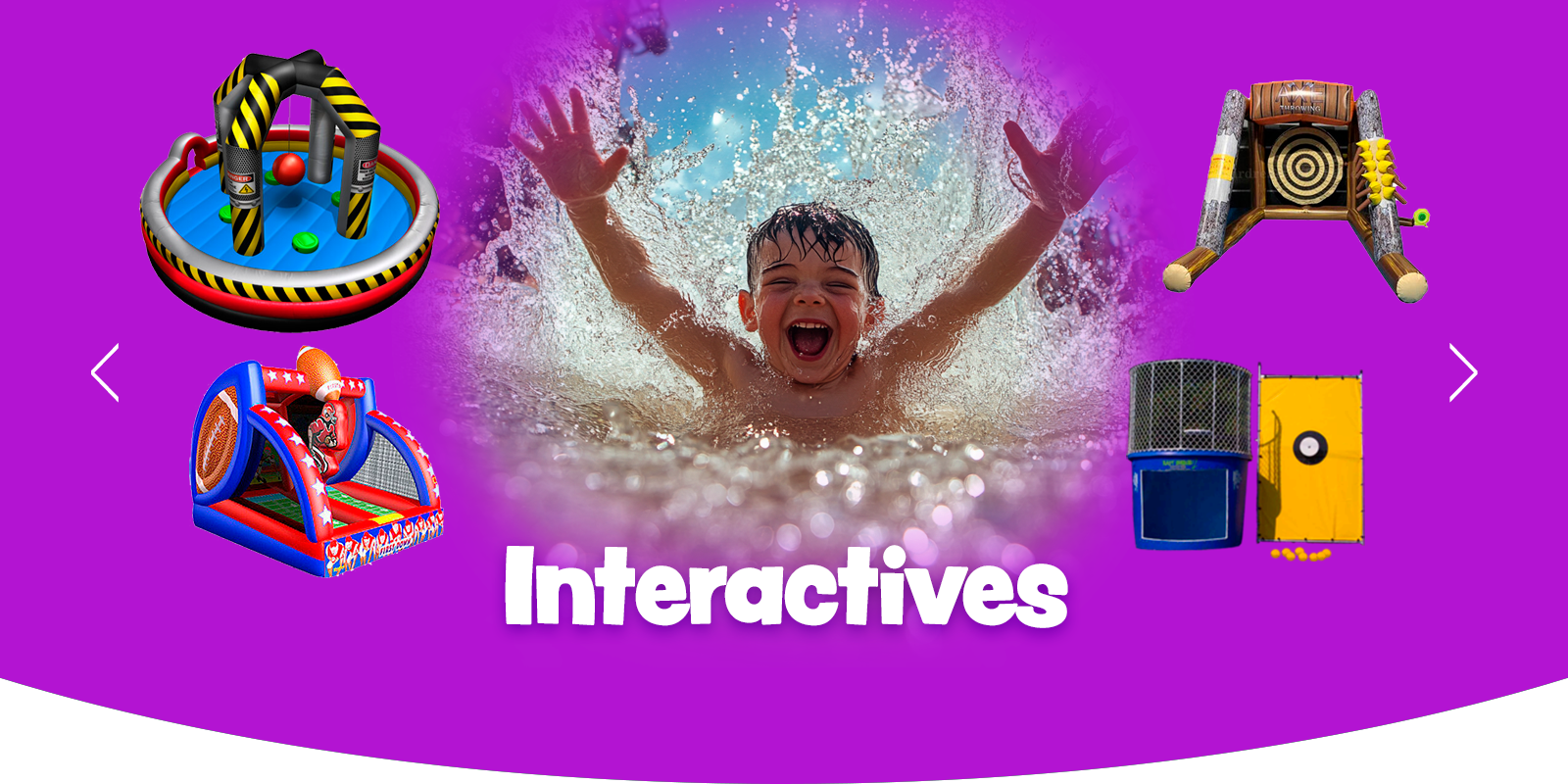
For school or church carnivals, throughput wins. Long obstacle courses and double-lane slides handle lines better than single-entry bounce houses. Add inflatable interactive games for kids like bungee runs or sticky walls only if you have attendants who can give quick instructions and reset each turn efficiently.
Water or dry: what really changes
Water transforms the experience and the logistics. A dry unit needs a blower, power, and stakes. A waterslide needs all that plus a hose connection, water pressure, drainage plan, and a no-slip path around it. Expect the splash zone to extend beyond the landing pad. Consider where runoff goes. If your lawn puddles easily, try a unit with a splash pool and a controlled drain. If you’re digging out towels from last summer, plan for more. Kids bring friends, and friends bring cousins.
Water also affects safety. Vinyl gets slick. Operators add mats at the steps and base, but you still need to coach kids to climb carefully and clear the landing area fast. Sunblock turns into a slick film. That’s fine, just be ready to rinse heavy areas with a hose occasionally. Some providers prefer to set up waterslides in morning shade to keep surfaces cool. If you can’t shade it, a light-colored unit helps.
When it’s hot, inflatable waterslides are worth the extra hassle. I’ve seen parties where the slide kept kids outdoors and active long after the cake, and parents actually talked to each other because the kids were busy and happy. Just plan for end-of-day wet footprints inside. Put a stack of old towels by the back door and thank yourself later.
How booking works behind the scenes
Reputable companies live and die by scheduling. Set your delivery window with some cushion. Most operators stack deliveries geographically to minimize drive time. If you want a tight install window because of naps or venue access, say so upfront. The earlier you book, the better they can work with you. Two to four weeks is a safe window in spring and summer. For peak Saturdays in June, earlier is better.
Expect a contract and a deposit. The contract spells out weather policies, damage responsibility, and supervision requirements. Read it. Take photos of your yard and text them to the provider if there’s anything unusual: stairs, a narrow side yard, a gate with a tight turn. They’ll appreciate it, and it saves you both hassle on the day.
On delivery day, clear the path. Move cars, pick up toys, kennel dogs. Show the installer the power source, the water spigot if relevant, and any buried line markings. Walk the setup spot together. A good installer will check for level, lay down a tarp, anchor corners, and verify pressure. They’ll show you the on-off switch and what to do if a breaker trips. If anything feels wobbly, speak up before they leave. Small adjustments now prevent big problems later.
Weather calls, and how to make them without regret
Two kinds of weather disrupt inflatables: wind and electrical storms. Rain alone is usually manageable for dry units if it’s light and warm, though vinyl gets slick. For waterslides, rain is mostly irrelevant except for lightning or heavy downpours. The real hazard is wind. Gusts will lift a unit that is not properly anchored, and even a well-anchored unit becomes unsafe above certain speeds because kids can’t keep their footing.
Ask your provider for their thresholds. You want numbers, not vibes. If wind is forecast at 10 to 15 mph with gusts to 20, they may ask to downsize your unit or reschedule. Listen to them. They’ve watched gusts roll down cul-de-sacs like invisible waves. If storms roll in, kill power, clear the unit, and wait. Water in the blower is bad. Kids in a vinyl box during lightning is worse.
Some companies offer a raincheck if you cancel the morning of due to weather. Others allow a reschedule within a season. Keep your guests in the loop with a plan B window: “We’ll confirm at 9 a.m., watch your texts.” Parents appreciate clarity.
Attendants, supervision, and the subtle art of line management
I’ve worked events where one calm adult saved the day. An attendant doesn’t just keep an eye on roughhousing. They keep the rhythm: six kids in, two minutes, rotate. They count out loud. They enforce height or age splits without shaming. They catch the early signs of dehydration or a kid who’s anxious but doesn’t want to say it. If you’re hosting a larger crowd, budget for one. If you’re running it yourself, assign a friend with a steady voice who won’t get pulled into other conversations.
The best line management trick is a visible timer. Two minutes per turn sounds short, but it moves the line and keeps the experience bright. For obstacle courses, let two kids race, winner stays or both rotate depending on the crowd. For slides, send in pairs to keep it fair. For mixed ages, alternate rounds: littles first round, bigs second. State the rules at the start, then repeat. Kids adapt fast when expectations are clear.
Indoor venues and offbeat setups
Gyms and rec centers are fantastic for inflatables if you handle power and protection. Ask about floor covers, ceiling height, and where you can anchor. Without stakes, sandbags and strap points should be generous. A low ceiling may rule out taller slides. Bring sound considerations into the mix. Blowers hum constantly. In a gym, the sound bounces. You may want to place the blower down a corridor with a duct extension if allowed, or at least orient it away from the main space.
Driveways and cul-de-sacs work with sandbags and extra mats, but consider traffic and slope. Rooftop terraces are almost always a no unless they were designed with anchor points and load limits for inflatables. If your idea is quirky, call and ask. Operators like creative setups when safety can be guaranteed. They dislike surprises at 7 a.m. with two more deliveries on the truck.
What can go wrong, and how to handle it gracefully
Stuff happens. A breaker trips when someone plugs in a margarita machine. A kid gets a bloody nose. A gust kicks up dust that sticks to everything. None of these are dealbreakers if you’re prepared. Know where your breakers are. Keep a small first-aid kit nearby. Have a broom or leaf blower to clear debris before kids reenter. If vinyl gets hot, drape a wet towel over the entry or mist with a hose for a few seconds. If the blower stops, clear kids out, switch it off, check power, reset the breaker, and call the provider if it doesn’t restart.
Damage fears are common. Commercial inflatables are tougher than they look. Tears usually come from sharp objects or dragging a unit across rough ground. Your operator handles the heavy moves. Your job is to enforce the no-shoes rule and keep pets from testing their claws on the step. If a seam pops or a zipper loosens, call for guidance. Many minor issues can be secured temporarily so the fun continues while help is on the way.
Ideas that lift a good party to a great one
You don’t need much beyond the inflatable and some snacks, but a few small touches make the day smoother. Shade goes a long way. A pop-up canopy near the unit gives kids a cool-down spot and parents a place to chat. A shoe corral at the entry keeps the chaos under control. A simple sign with rules saves your voice. For water days, a tote for swimsuits and a laundry basket for towels help keep the wet pile contained.
Theme lightly. Kids party inflatable ideas often center on color or character, but the activity is the real star. I’ve seen parents overdecorate the yard while the kids spend all their time running from the bounce castle to the snack table and birthday party equipment back. If you want to add something extra, consider a bubble machine set away from the inflatable so the surface doesn’t get slick, or chalk lines for races while kids wait their turn. Keep sugar moderate and water plentiful. Hydrated kids bounce better.
A quick pre-booking checklist that saves headaches
- Measure your space with a tape, including height clearance, and note ground type and slope. Confirm power: dedicated outlets, circuit capacity, and distance to setup spot. Ask about insurance, cleaning practices, anchoring method, and wind policy. Match the unit to your crowd’s age range and size, thinking about throughput. Clarify delivery window, setup path, cancellation terms, and any venue requirements.
One last thing about operators, and why the person matters
You’re not just renting vinyl and air. You’re hiring judgment. The best rental companies pay attention to small things: they wrap cords so no one trips, they angle the unit so parents can see inside, they bring extra stakes because ground conditions vary by yard. They’ll tell you no if your plan isn’t safe, and you want that kind of partner. Call two or three companies. See who asks smart questions about your site and audience. The conversation you have on the phone is a preview of the service you’ll get when a truck pulls up and the day begins.
The reason these parties are worth the effort is simple. A good inflatable resets the social equation for kids. The quiet ones get a turn to whoop, the energetic ones burn it off, and for a few hours the backyard becomes a place where everyone knows the rules and anyone can join. When you book with care and respect the practical limits, the fun takes care of itself. That’s the mark of a well-run event, whether it’s a backyard birthday with a single bouncy house or a full-blown festival with multiple inflatables for parties humming in the sun.